
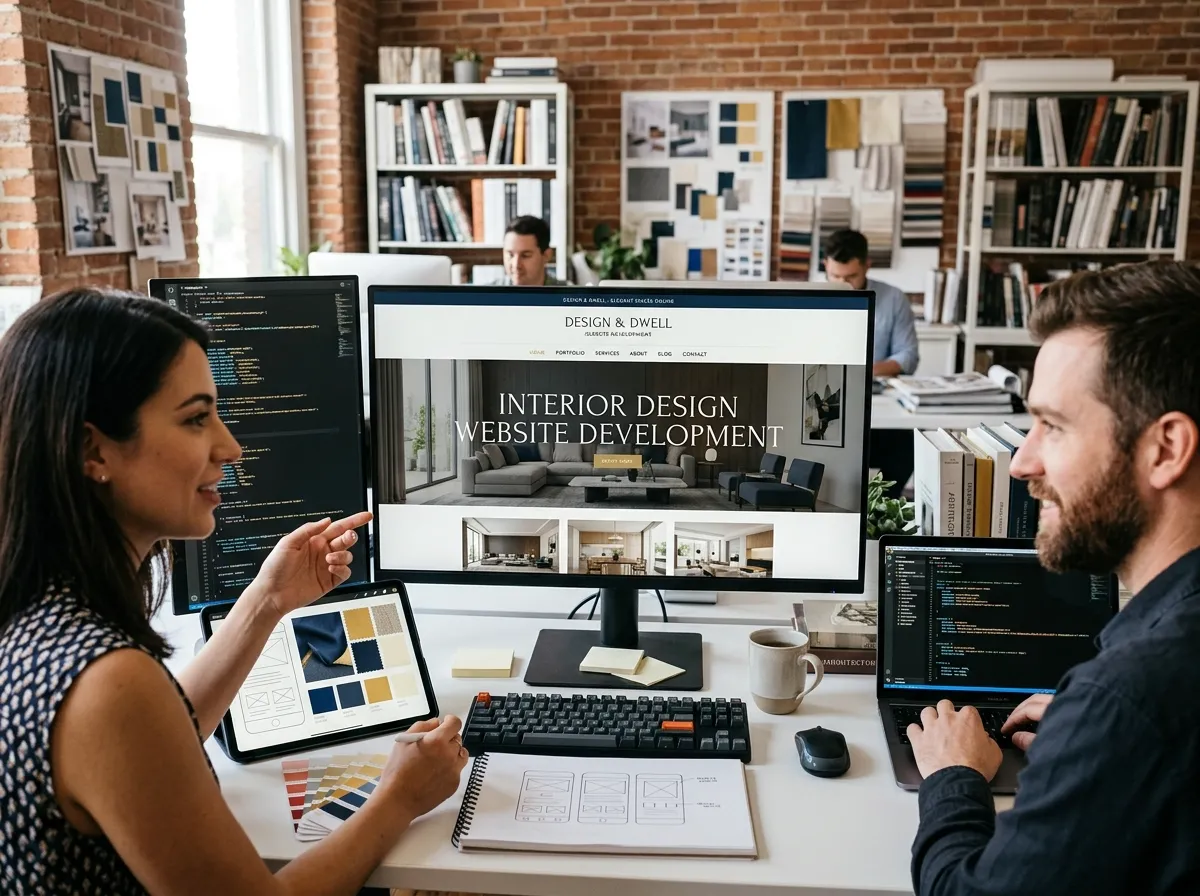
Interior designers sell a feeling before they sell a service. If your website looks dated, cluttered, or slow, visitors assume your spaces will feel the same way. That is why interior design website development in 2026 is less about adding features and more about controlled, confident presentation.
This guide walks through templates, layouts, and hero sections, the three decisions that shape almost everything else.
Hire Our Professional Services
What Changed in Interior Design Website Design for 2026
Search for interior design website 2026 examples and you will notice a clear shift. Heavy sliders and busy sidebars are gone. In their place are full-bleed imagery, generous white space, and typography treated as a design element rather than an afterthought.
Three trends matter most this year.
Image-first storytelling. Interior design websites now behave like digital magazines. Large photos, minimal captions, and slow reveals as the visitor scrolls.
Restrained motion. Interior design website animation has matured. Instead of bouncing elements, designers use subtle fades, parallax, and image zooms that feel expensive rather than gimmicky.
Depth without weight. Interior design website 3D touches, such as rotating room views or scroll-linked perspective shifts, are appearing on high-end sites, but only where they genuinely help the visitor understand a space.
Choosing Between Interior Design Website Templates and Custom Builds
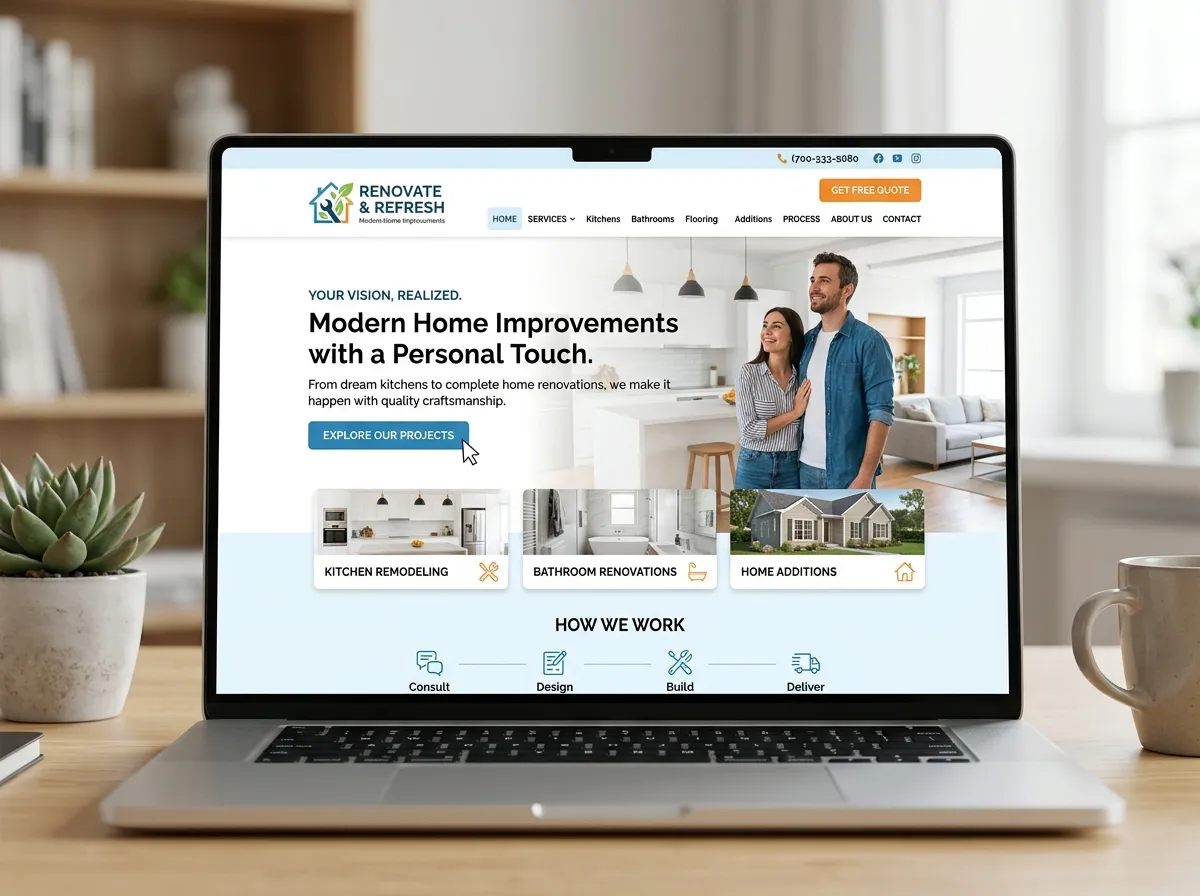
Interior design website templates are tempting. They are fast, affordable, and often beautiful in the demo. The problem is that a template demo is filled with professional stock photography and perfectly balanced text. Your real content rarely fits that mold. also check modren home improvment services website design.
A template works well when you are early in your career, need to launch quickly, or have a modest portfolio. Look for an interior design website template layout with flexible gallery sections, a strong project page structure, and clean mobile behavior. Plenty of interior design website template free options exist, but free themes usually come with limited support and bloated code.
Custom development makes sense when your work is your differentiator, when you need unusual layouts for specific project types, or when site speed and SEO directly affect your lead flow. A custom build lets your interior design website design match your brand instead of a designer you have never met.
If you want a complete custom site built from the ground up, you can have our developer build your complete website.
Interior Design Website Layout Principles That Work
A strong interior design website layout follows a simple rhythm: show, explain, prove, invite.
Show. The hero and opening gallery establish your aesthetic instantly.
Explain. A short services section clarifies what you do, whether that is full-service residential design, e-design, kitchen interior website design projects, office fit-outs, or restaurant interior website design.
Prove. Project pages, testimonials, and press mentions confirm you deliver.
Invite. A clear, low-pressure contact prompt appears throughout, not only in the footer.
Interior design website design layout decisions should also respect the grid. Alternating full-width images with two-column text blocks keeps pages from feeling monotonous while maintaining order. White space is not wasted space; it is what makes premium work look premium.
Hire Our Professional Services
Hero Section Fundamentals
Your interior design website hero section is the single most important block on the site. It has about three seconds to communicate who you are and what kind of spaces you create.
A high-performing interior design website hero usually contains one exceptional image, a short headline stating your specialty and location, a one-line subheading, and a single primary call to action.
For the interior design website header itself, keep navigation minimal: Work, Services, About, Journal, Contact. Overloaded menus dilute focus.
Interior design website banner ideas that consistently perform include a single hero image of your best completed room, a slow-fading sequence of three signature projects, a short muted video walkthrough, and a split layout with imagery on one side and a bold typographic statement on the other.
Avoid text placed over the busiest part of an image. If contrast is a problem, use a soft gradient overlay rather than a heavy dark box.
Mobile Comes First, Not Last
More than half of your visitors will arrive on a phone. Interior design website mobile experience determines whether they stay.
Practical rules: hero text must remain readable at small sizes, galleries should swipe rather than force pinch-zoom, tap targets need breathing room, and large images must be compressed and served in modern formats so pages load quickly on mobile data.
A beautiful desktop site that crawls on a phone is a lost lead generator.
Interior Design Website Theme and Visual Identity
Your interior design website theme should extend your studio’s identity, not compete with it. That means choosing two typefaces at most, a limited palette of three to four colors, and a consistent image treatment.
Neutral palettes remain dominant because they let the interiors carry the color. If your brand leans bolder, introduce accent color sparingly through buttons, links, and small typographic details.
Once your visual direction is set, every page should feel like it belongs to the same studio. Consistency is what separates a professional interior design website from a collection of attractive pages.
Performance, SEO, and the Practical Side
Interior design websites are image-heavy by nature, which makes performance a constant tension. Compress every image, lazy-load galleries, limit custom fonts, and avoid stacking multiple animation libraries.
On the SEO side, give each project page a descriptive title, write real alt text describing the room and style, and create service pages targeting the searches clients actually use, such as “interior designer in [city]” or “kitchen renovation design.”
If your existing site needs sharper, faster, responsive pages rather than a rebuild, you can get responsive web pages designed and edited for your website.
A Practical Build Checklist
Before launch, confirm the following: your hero communicates your niche within three seconds; your top three projects are visible without scrolling far; each project page tells a short story rather than just showing photos; your about page includes a real photo of you or your team; contact options appear at least three times across the page; the site loads in under three seconds on mobile; and every image has meaningful alt text.
Final Thought
Interior design website development in 2026 rewards restraint. Fewer sections, larger images, cleaner type, and one clear action per page will almost always outperform a crowded site trying to say everything at once.
If you want a developer who understands both the aesthetics and the technical execution, you can review the full range of services at Interior design website services and start building a site that matches the quality of your work.
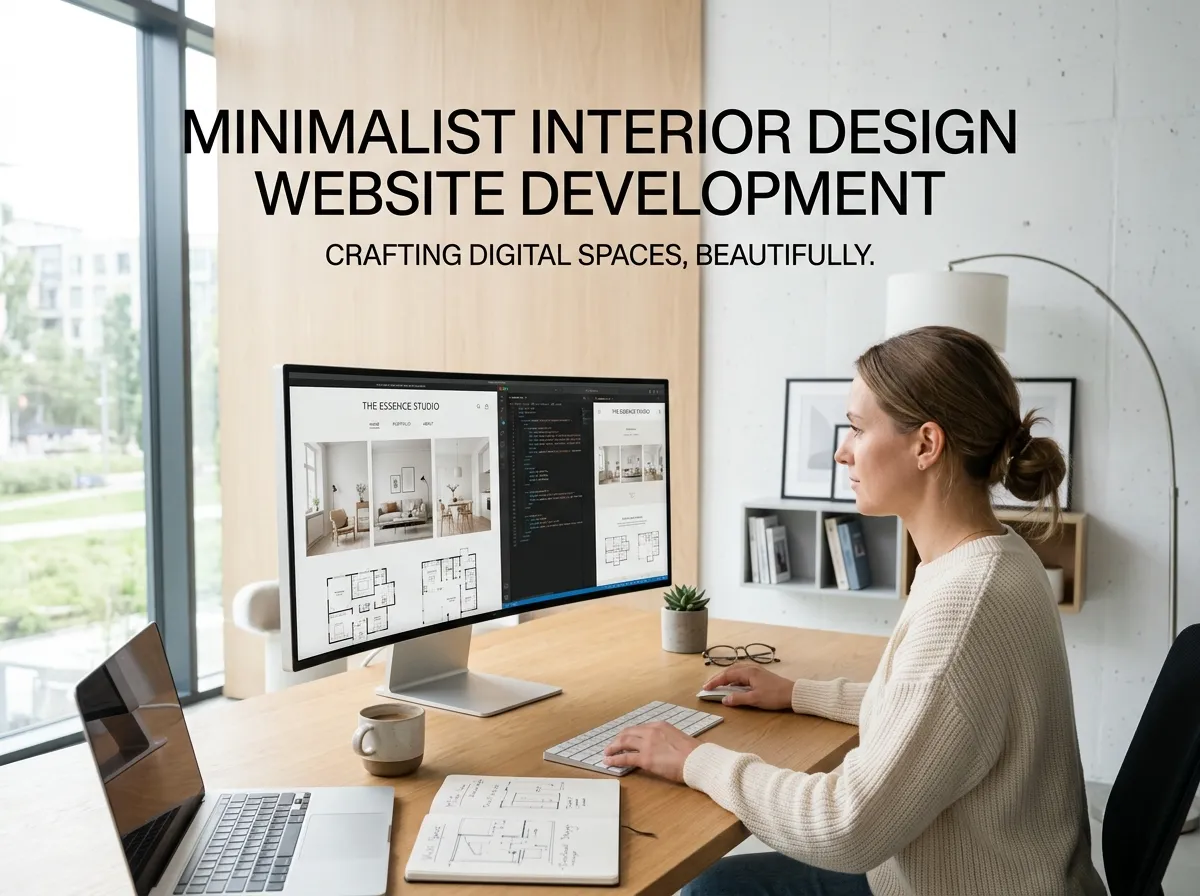
Luxury Interior Design Website Development Build A High-End Portfolio That Converts - DreamNexTech
[…] Press mentions belong as small logos in a quiet row, not as a flashing badge. Awards get a single line. Your credibility should feel assumed rather than argued. also check interior design website development. […]