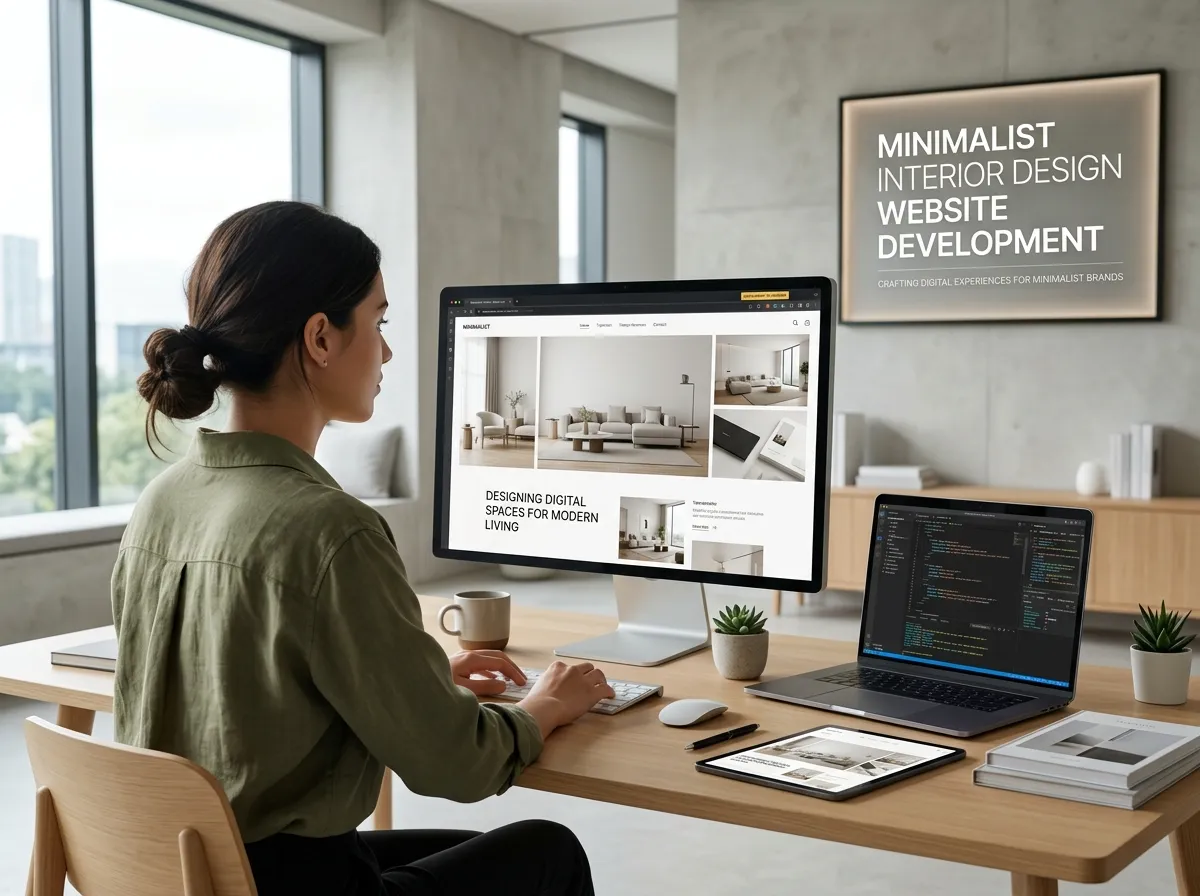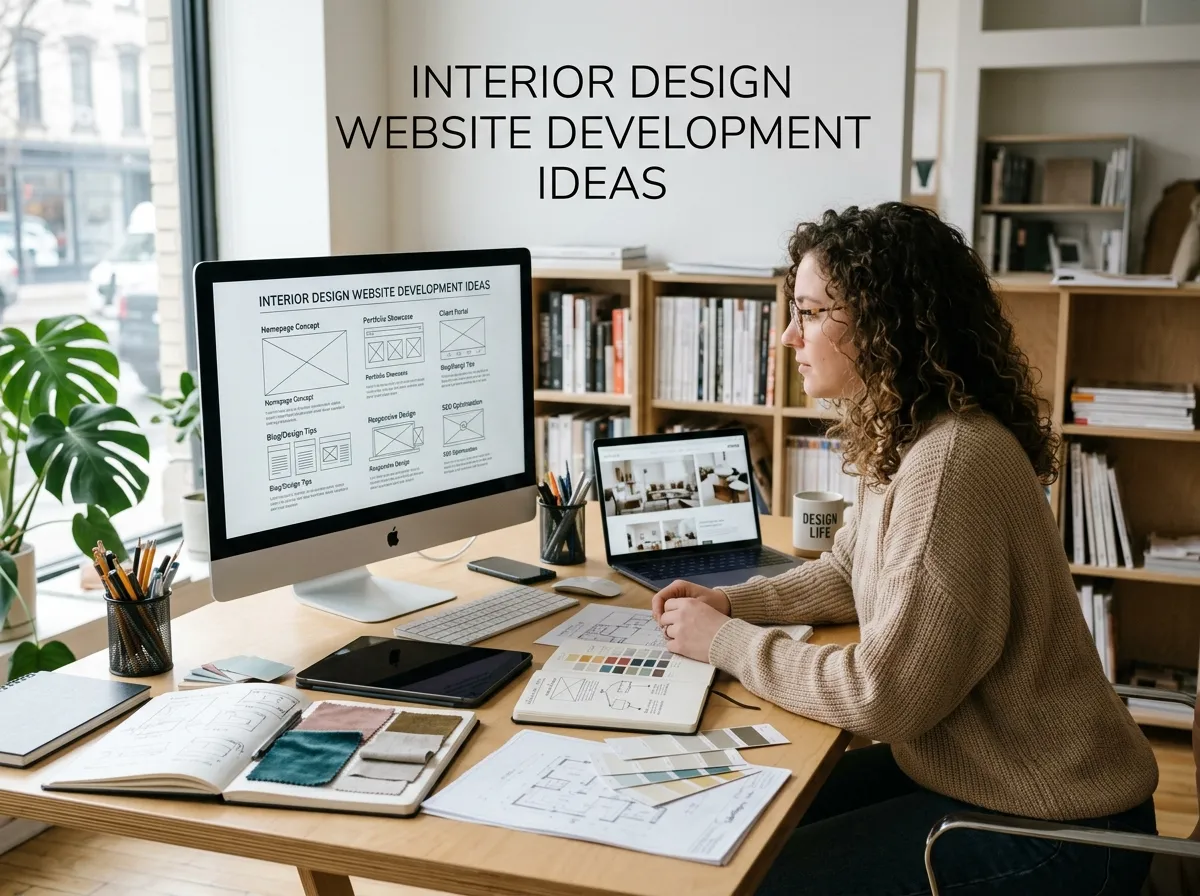
Staring at a blank homepage is its own kind of design brief. You know your work is strong. Translating it into a site that feels like you is the hard part.
This article collects practical interior design website ideas, from aesthetic direction to layout structures you can actually build.
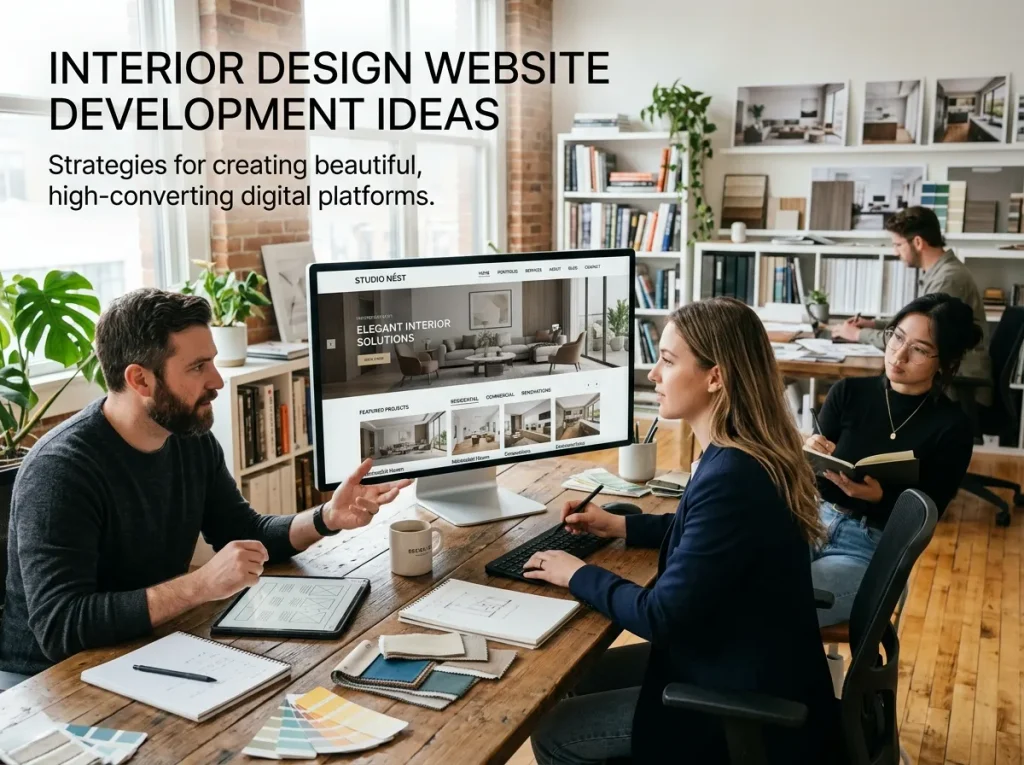
Hire Our Professional Services
Interior Design Website Development Ideas
Start With a Moodboard, Not a Template
Before browsing interior design website inspiration galleries, build a moodboard interior design website concept for your own brand.
Collect ten images that represent your work, three typefaces you are drawn to, a palette of four colors maximum, and two or three existing sites whose pacing you admire. Note what you like about each, specifically. “Clean” is not a design decision; “wide margins, serif headlines, no borders” is.
This step prevents the most common mistake in interior design website design ideas: assembling features you liked in isolation into a site with no coherent voice.
Aesthetic Directions Worth Considering
Your interior design website aesthetic should mirror the interiors you create. A few directions that translate well to the web:
Warm minimal. Off-white backgrounds, a single serif, generous space. Suits residential studios working in natural materials.
Editorial contrast. Large type, asymmetric layouts, mixed image sizes. Suits designers with strong, opinionated work.
Japanese interior design website influence. Extreme restraint, horizontal rules, muted palette, and layouts that let emptiness carry meaning. Especially effective for wabi-sabi or minimalist practices.
Vintage interior design website styling. Textured backgrounds, classic serif pairings, and warm sepia-leaning photography. Works for studios specializing in period restoration or antique sourcing.
Creative and expressive. For a creative interior design website, break the grid deliberately, overlap images and text, and use scroll-triggered movement. This direction demands confidence and strong photography.
Using Color Intentionally
Most designers default to neutral, and that is usually right. But color can be a signature.
An interior design website green palette, especially sage or deep forest, communicates natural materials and biophilic design. An interior design website orange accent brings energy and warmth, effective for studios working in mid-century or Mediterranean styles. An interior design website red accent is bold and best used sparingly, on buttons and hover states only. minimalist interior design website development.
A colorful interior design website can work beautifully when the studio’s projects are genuinely colorful. If your interiors are restrained, a loud site creates a mismatch clients notice immediately.
The safest approach: neutral base, one accent color, applied consistently.
Hire Our Professional Services
Layout Ideas That Actually Convert
Interior design website ideas layout decisions should follow how clients browse. They skim images, stop on one they love, then look for proof and contact details.
Layouts worth building:
The staggered grid. Project thumbnails offset vertically, creating rhythm and inviting scroll.
The full-bleed sequence. One project per screen, edge-to-edge, with the name appearing on hover.
The split index. Project titles listed on the left, with the corresponding image appearing on the right as the visitor hovers. Elegant and unusual.
The category-led home page. Sections for residential, kitchen interior website design, office interior design website work, and restaurant interior website design, each with a representative image. Useful for studios serving multiple markets.
Gallery and Image Strategy
Your interior design website gallery is your argument. Curate ruthlessly.
Practical rules: six to twelve images per project, one hero shot, a mix of wide room shots and close details, consistent color grading, and no duplicate angles.
Interior design website images should be optimized before upload. Large unoptimized photos are the single most common cause of slow design portfolios.
Consider adding a short interior design video for website use on your homepage. A 20 to 30 second silent walkthrough, muted and auto-playing, adds atmosphere without slowing the page if compressed correctly.
Specialty Sections That Set You Apart
Beyond the standard pages, a few sections consistently earn attention.
A process section explaining your phases from consultation to install reassures clients who have never hired a designer. A materials or sourcing journal demonstrates expertise. A before-and-after section is particularly persuasive for renovation work, including wood work interior remodeling website design projects where the transformation is dramatic.
An interior design living room website section or dedicated room-type pages can also capture specific searches, since many clients search by room rather than by service.
Making It Unique
A unique interior design website usually contains one memorable idea executed well, not ten small novelties. That idea might be a horizontal scrolling portfolio, a palette that shifts as you move between projects, a hand-drawn floor plan motif, or an index organized by material rather than by project.
Pick one. Build it properly. Let everything else stay quiet.
For custom interactions and unusual layouts, you can hire a front-end web developer who can translate an unconventional concept into clean, fast code.
Avoiding Common Mistakes
Several patterns undermine otherwise strong interior design websites: autoplaying music, text placed over busy image areas, navigation hidden behind an icon on desktop, project pages without any written context, contact pages with only a form and no human detail, and inconsistent photo editing across projects.
Each one is easy to fix and each one costs inquiries.
Turning Inspiration Into a Build
Once your direction is set, move from concept to structure: sketch the homepage sections in order, decide the project page template, write the copy before designing around it, then build mobile layouts alongside desktop rather than afterward.
If you have a finished design file and need it developed accurately, you can convert your design into clean HTML5 rather than rebuilding from scratch in a page builder.
Final Thought
The best interior design website inspiration is not another designer’s site. It is your own portfolio, viewed honestly. Identify what makes your work distinctive, then build a site that repeats that message in every layout decision.
When you are ready to build, browse the full list of development services at talha_jamil on Fiverr.