
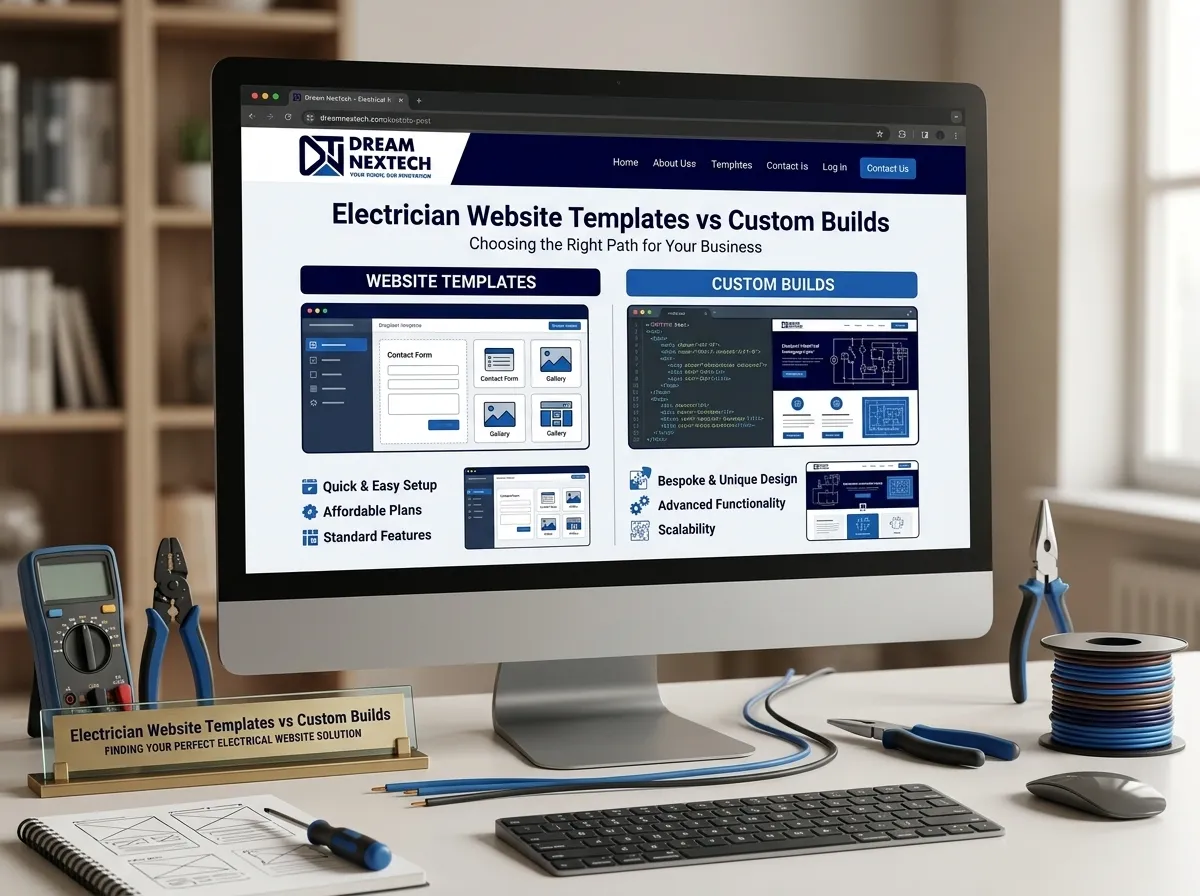
A £49 electrician website template looks like an obvious win. Buy it Friday, launch Sunday, done. Six months later the site loads in five seconds, ranks for nothing, and produces two enquiries a month both of which were people who already knew your name.
We’re not going to tell you templates are always wrong. Sometimes they’re the right call, and we’ll say so below. But the honest comparison is worth having before you spend money on either option.
DreamNexTech Electrician Website Templates vs Custom Builds, so we have an interest here. We’ll show our working anyway.
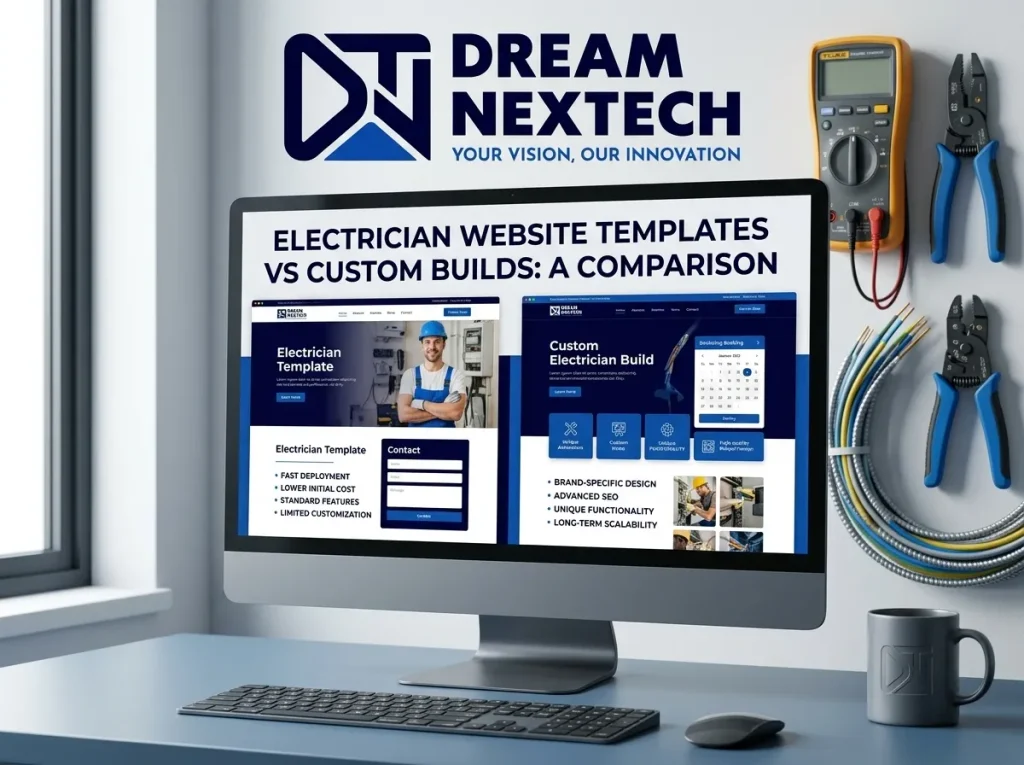
Electrician Website Templates vs Custom Builds
Where Templates Genuinely Make Sense
Be fair to them first. A template is the right choice when:
You’re brand new and need something today. A live site beats a perfect site that launches in six weeks. Get a template up, get the phone number on it, replace it when you have cash flow.
Your work comes entirely from referrals. If every job arrives through word of mouth and you just need somewhere for people to check you’re real, a template does that job for £49.
You’re testing a new service line. Before committing to EV charger installation, put a single page up and see whether anyone bites.
Your budget is genuinely under a few hundred pounds. A cheap template beats no website. It also beats a badly-built custom site, which is a real thing that exists.
If any of those describe you, buy the template. Come back when you’re turning work away.
Where Templates Cost You Money
Load speed. Electrician website templates are built to demo well, which means sliders, animated counters, icon libraries, and four fonts. That’s typically three to five megabytes before your own photos go on. Most land at four to seven seconds on mobile.
Roughly half of visitors leave a page that takes more than three seconds. You’re paying for traffic, then losing half of it before your homepage appears.
Structure you can’t change. Almost every template gives you one services page with a bullet list. But customers don’t search “electrician services” — they search “fuse board replacement Leeds,” “landlord EICR certificate near me,” “EV charger installer Bristol.”
Ranking for those requires a separate page for each, properly written and interlinked. Templates rarely support it, and bolting it on afterwards usually breaks the design.
No service area pages. Same problem. You cover eight towns and the template gives you one contact page.
Generic schema, or none. Structured data marking you as an Electrician with your service area and hours is what feeds Google’s local results. Templates ship with nothing, or with markup for a generic business.
Identical to your competitors. The three most popular electrician templates are used by thousands of firms. There’s a real chance the electrician one town over has the same homepage.
Plugin dependency. Fifteen plugins to make the template do what you need. Each one is a security risk, a compatibility problem, and another thing slowing the page.
Read about Electrician Website Redesign Services.
What a Custom Build Changes
A custom electrician website is designed around your services, your area, and how your customers actually search.
Speed as a design constraint. We build to under 2.5 seconds on a mid-range phone over 4G. Hand-coded semantic HTML, images in WebP and AVIF with correct srcset, fonts subset and preloaded, no page-builder overhead.
A page for every service and every area. This is the structural change that produces most of the ranking difference, and it’s the one templates can’t accommodate.
Conversion built in. Tappable phone number in the header on every page. A sticky mobile call bar. A four-field quote form. Trust signals above the fold.
Proper local SEO. Electrician schema with service area and hours, consistent name-address-phone formatting across every listing, and Google Business Profile alignment.
Something you own. No theme licence, no subscription, no plugin that breaks after an update.
Detail on what’s included is on our electrician website design services page, and examples of finished builds are in our development portfolio.
The Honest Cost Comparison
A template runs roughly £49 upfront, plus £15–£30 a month hosting, plus your own time — realistically twenty to forty hours getting it looking right — plus premium plugins as you discover the gaps.
A custom build is a larger one-off cost, cheaper hosting because there’s less to serve, and effectively no ongoing licence fees.
The number that decides it isn’t the build cost. It’s what one job is worth to you.
If a rewire brings in £2,500 and a custom site produces three extra enquiries a month, it has paid for itself before the end of the first quarter. If you’re doing £80 callouts and your work comes from a Facebook group, the maths runs the other way — and we’d tell you that on the call.
The Middle Option Nobody Mentions
You don’t have to choose between a £49 template and a full custom build.
Take a good design and have it built properly. If you’ve bought a template you like the look of, or worked with a designer and have mockups sitting in a folder, the design half is done. We build finished designs into fast, responsive pages — hand-coded, correctly structured, and considerably faster than the original.
Or fix what you have. Sometimes the template is fine and the problem is three specific things: an untappable phone number, no service pages, and a four-megabyte hero image. That’s a week of work, not a rebuild. Our guide to electrician website redesign covers when a fix beats a rebuild.
How to Decide
Ask yourself three questions.
How much is one job worth? Above about £500, the investment maths works quickly.
Where does your work currently come from? If it’s all referrals, a template is fine for now. If you want work from search, you need service pages and area pages.
What’s your current site producing? Check your analytics. If you’re getting traffic but not calls, you have a conversion problem. If you’re getting neither, you have a structure and speed problem. Both are fixable; they need different fixes.
Get an Honest Assessment
We’ll tell you if a template is the right call for where you are. We’d rather do that than sell someone a build they can’t yet justify.
Send DreamNexTech your current site and we’ll come back with your real mobile load time, what’s structurally missing, and whether a fix, a rebuild, or staying put makes the most sense — with a fixed quote either way.
Website design and development runs alongside the SEO and digital marketing services we offer. For electricians, the two only work together — a fast site nobody finds and a well-ranked site nobody calls are the same problem from different ends.
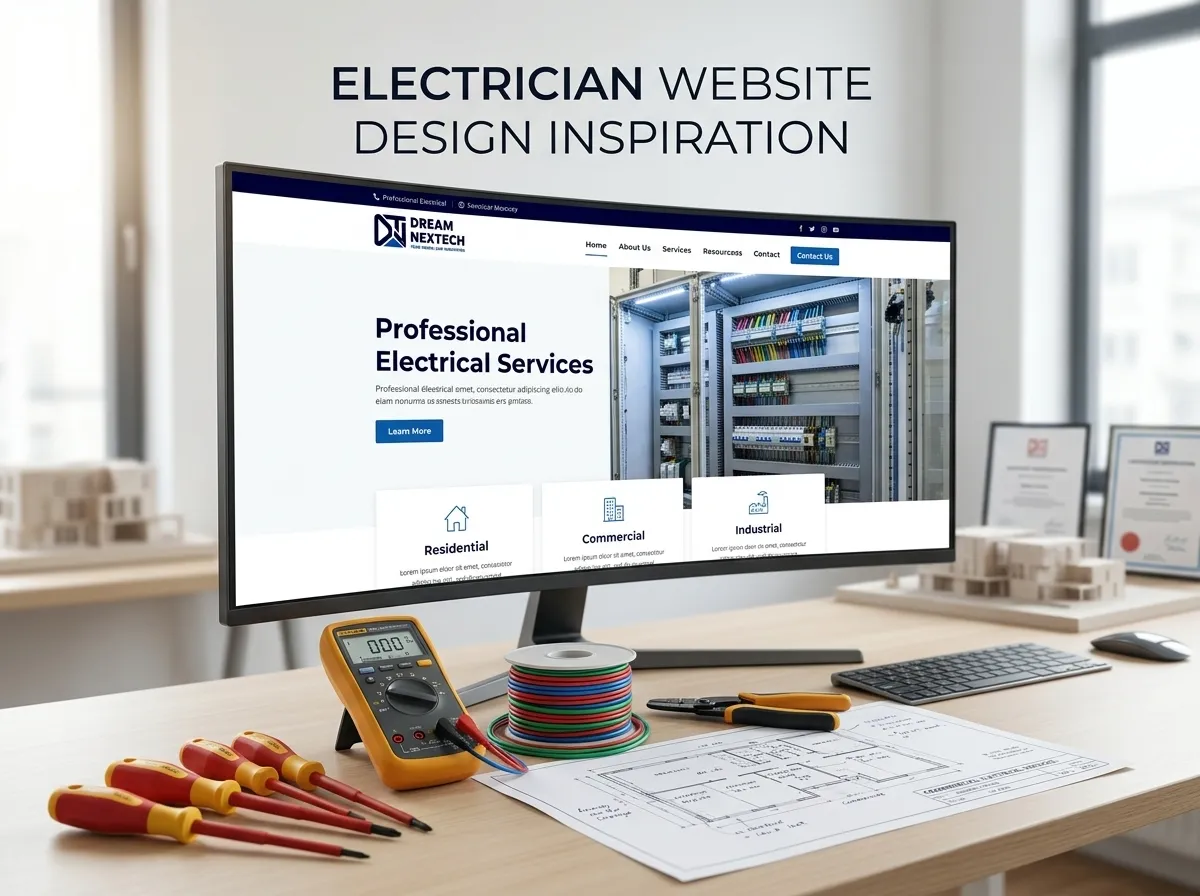



Website Design For Electricians What We Build And Why It Converts - DreamNexTech
[…] Each page explains what the job involves, what it typically costs or what affects the price, how long it takes, and what happens next. This is the single biggest change most electrician websites need — a bullet list on the homepage cannot rank for eight different searches, but eight pages can. Electrician website design services. […]