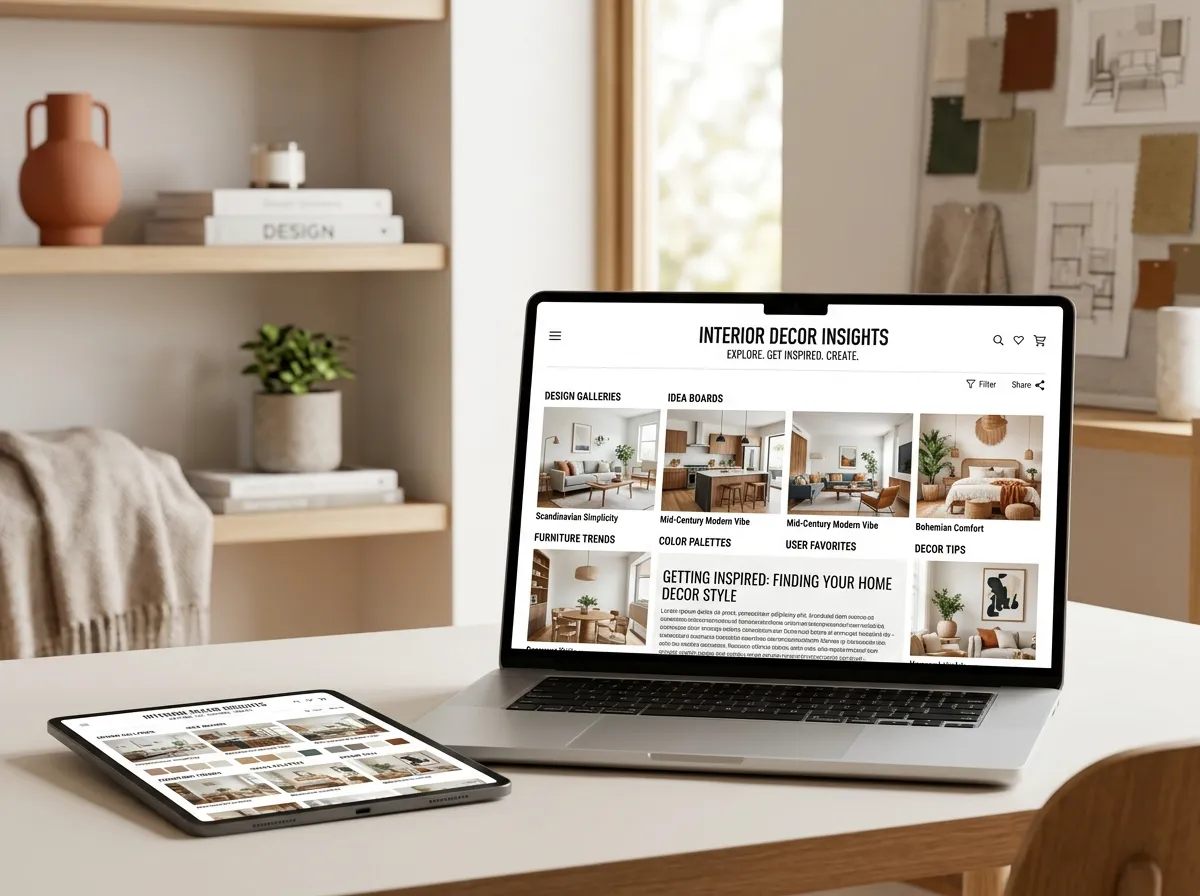
Scrolling gorgeous decor websites is the most enjoyable form of procrastination in ecommerce. You save twelve screenshots, feel inspired for an hour, and end the week with the same homepage you started with.
The problem isn’t a shortage of inspiration. It’s that inspiration without a build plan is just a mood board. What actually moves revenue is identifying why a site works — the structural decisions underneath the pretty surface — and then having someone implement those decisions on your domain.
So this Best Home Decor Websites Services for Design Inspiration guide. Here are the categories of home decor websites worth studying, the specific things each one gets right, and the services that turn all of it into a live, fast, converting store.
Hire Our Professional Services

Where to Find Genuinely Useful Decor Design Inspiration
Awwwards and CSS Design Awards — Filter by ecommerce and interiors. These push the boundary of motion and layout. Borrow the ideas, not the full implementation; award sites often trade speed for spectacle.
Land-book and Lapa Ninja — Landing page galleries, excellent for hero section structure and CTA placement.
Pinterest and Behance — Best for palette, typography pairings, and mood. Weakest for real conversion patterns, because concepts there rarely ship.
Actual competitor stores — The most underrated research. Open five decor stores that outrank you, and map their homepage section order, filter systems, and product page layout. That’s where real conversion patterns live.
Shopify and WooCommerce theme demos — Useful for seeing what’s achievable inside a realistic budget and timeline.
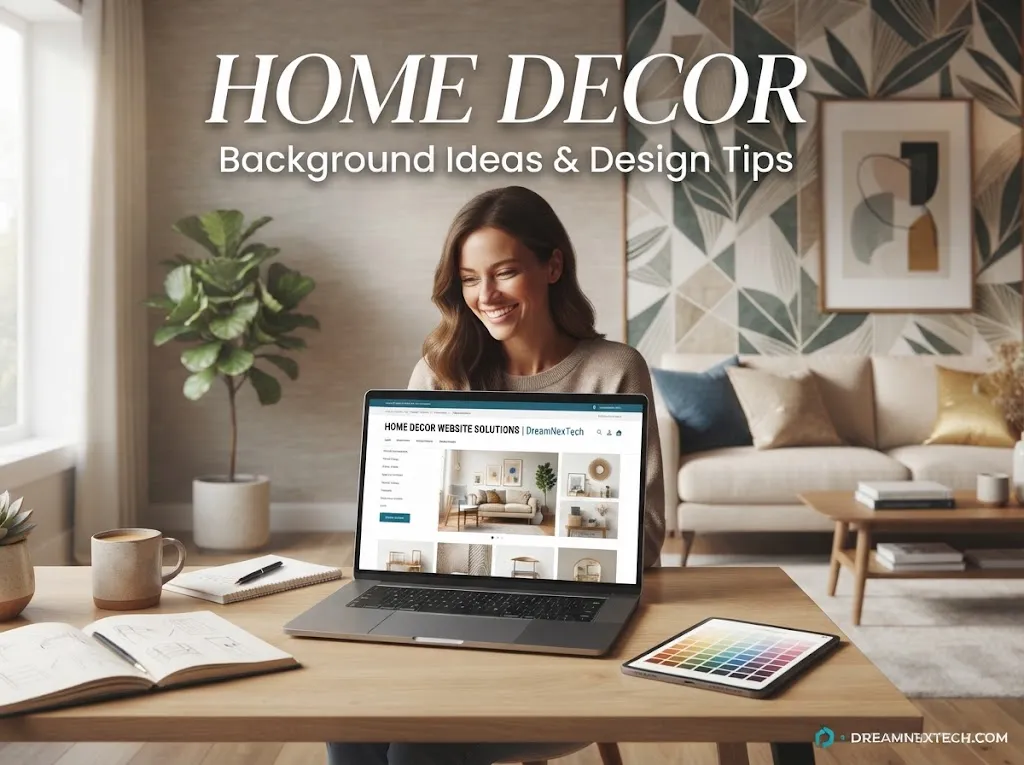
home decor website design background ideas.
6 Types of Best Home Decor Websites (and What to Steal From Each)
1. The Minimal Scandinavian Store
What they get right: brutal restraint. Five homepage sections, enormous whitespace, one accent colour, one typeface family.
Steal: the section count. Most decor homepages have twice as many blocks as they need, and each extra block dilutes the path to checkout.
2. The Luxury Interiors Brand
What they get right: pacing. Products appear one at a time with generous vertical space, like exhibits in a gallery. Dark palettes, brass accents, high-contrast serif headlines.
Steal: slow scroll rhythm on high-ticket items. If a piece costs $2,000, don’t show it in a six-column grid.
3. The Artisan / Handmade Shop
What they get right: human presence. Maker photos, workshop shots, a story that runs two sentences instead of two paragraphs.
Steal: the trust layer. Personality is what lets a small brand charge more than a marketplace.
4. The High-Volume Decor Marketplace
What they get right: findability. Persistent filters, fast search with suggestions, sticky add-to-cart, clear stock status.
Steal: the filter system. Decor shoppers filter by colour, material, room, and size — if your store can’t do that, you’re losing large catalogues’ worth of sales.
5. The Room-First Inspiration Site
What they get right: shoppable room scenes. Navigation is organised by room, not product type, matching how people actually think.
Steal: “Shop the Look.” It reliably lifts average order value because it sells sets.
6. The Sustainable / Natural Materials Brand
What they get right: honest detail. Material sourcing, care instructions, and dimensions are front and centre rather than buried in a tab.
Steal: the product page depth. Decor returns drop sharply when dimensions and materials are unmissable.
Hire Our Professional Services
What All the Best Home Decor Websites Share
Study enough of them and the same seven traits appear every time:
- One visual language. Consistent photography style, one type system, one spacing scale.
- A single obvious next action on every screen.
- Mobile-first execution — most decor traffic is mobile, and most decor sites are still designed desktop-first.
- Fast loads despite heavy imagery, via modern formats and lazy loading.
- Room and lifestyle context for every product, not just cut-outs.
- Frictionless cart — slide-out drawer, visible shipping threshold, guest checkout.
- Search-ready structure — clean URLs, product schema, descriptive alt text, real category pages.
Your inspiration research should produce a checklist against these seven, not a folder of screenshots.
Turning Inspiration Into a Live Site
This is the step where most decor brands stall. The gap between “I love this look” and “this is my store” involves:
- Translating a mood board into a design system — spacing scale, type scale, colour variables, component states
- Building responsive templates for home, collection, product, cart, and content pages
- Handling image pipelines so heavy decor photography doesn’t destroy load times
- Setting up filters, variants, and inventory logic that survives a growing catalogue
- Implementing SEO fundamentals so the site earns traffic instead of waiting for ads
- Testing across real devices and browsers, not just a design file
Templates get you maybe 60% of the way. The remaining 40% — the part that makes the site look like the inspiration instead of like the template — is custom development work.
The Services Worth Paying For
Front-end development. Pixel-accurate, responsive implementation of your design. This is where quality is won or lost.
Full website development. Design, build, integrations, and launch handled end to end — the right choice if you’re starting fresh or replatforming.
WordPress / WooCommerce builds. Best when you want content marketing and ecommerce under one roof with full ownership.
Design-to-code conversion. If you already have Figma or PSD files from a designer, you only need the build half.
Ongoing optimisation. Speed, CRO, and SEO improvements after launch, where compounding gains actually happen.
Get the Look You’ve Been Saving Screenshots Of
You’ve done the inspiration part. What’s missing is execution — and that’s a solvable, quotable, time-boxed problem.
DreamNexTech builds decor and ecommerce stores that match the quality of the sites you’ve been studying: clean front-end code, real responsive behaviour, fast loads, and a checkout path designed to convert. Whether you need a fresh build or a rebuild on WordPress, our business and WordPress website development service covers design through launch.Send us three sites you love and your product catalogue. We’ll tell you exactly what it takes to get there.