
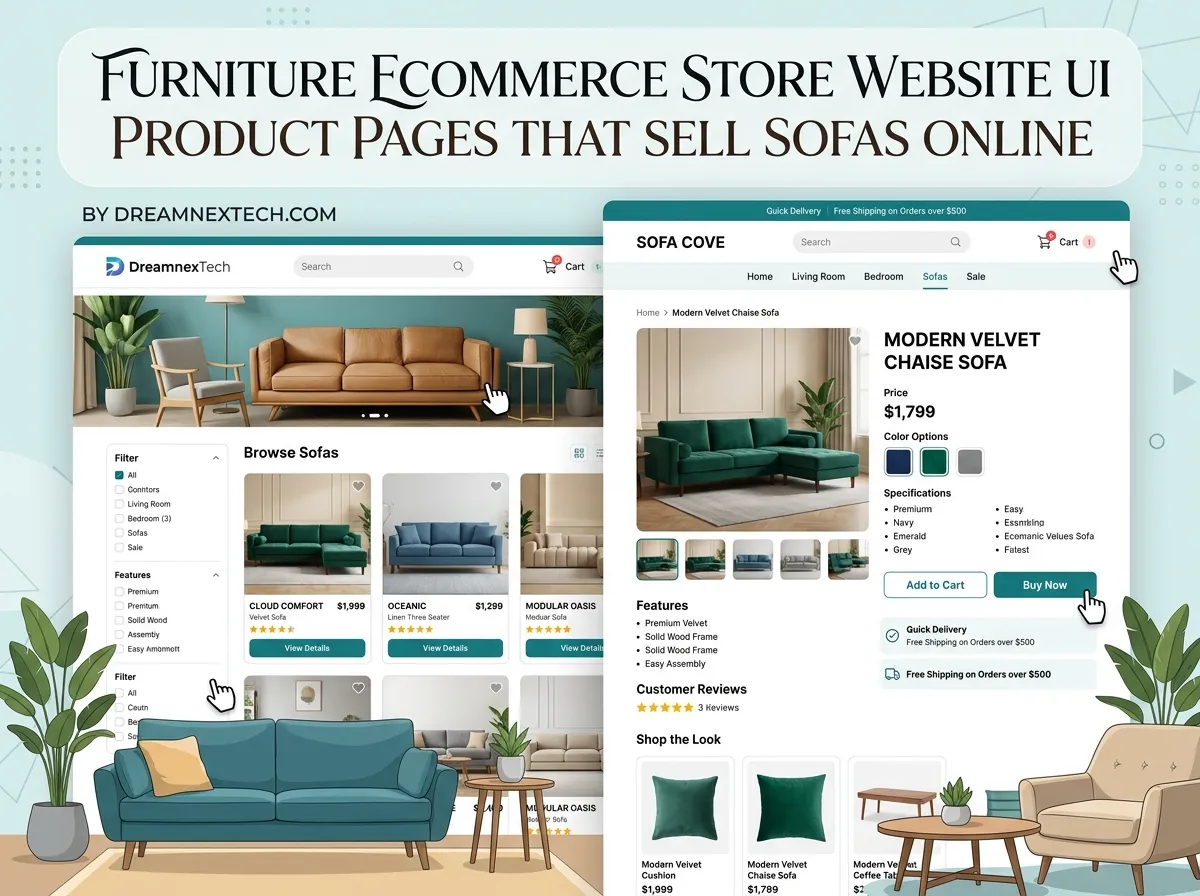
A sofa is the hardest thing to sell on the internet. It is expensive, it is enormous, comfort cannot be photographed, colour cannot be trusted on a screen, and returning one is a logistical nightmare that both parties dread.
Every one of those obstacles gets resolved or fails to get resolved on a single screen: the Furniture Ecommerce Store Website UI Product Pages.
This is a component-by-component breakdown of a furniture ecommerce product page built to actually close high-ticket sales.
Hire Our Professional Services
Furniture Ecommerce Store Website UI Product Pages
The Gallery: Your Most Important Component
Photography is not a marketing expense on a furniture site. It is the product experience.
The minimum image set for a sofa:
- Front three-quarter view on a clean background — the hero
- Straight-on front view for accurate proportion reading
- Rear view — critical for anyone floating the sofa in a room
- Fabric close-up at texture-visible resolution
- Detail shots — stitching, legs, cushion construction
- Scale reference — the sofa beside a standard doorway or a person
- Styled room context showing it in a real interior
- One image per available fabric or finish
Interaction requirements: smooth zoom (pinch on mobile, hover or click on desktop), swipeable on mobile, thumbnail navigation on desktop, and instant gallery swap when a fabric option changes. A 360° spin outperforms static imagery on upholstered pieces, and short video showing cushion give and recline motion converts strongly.
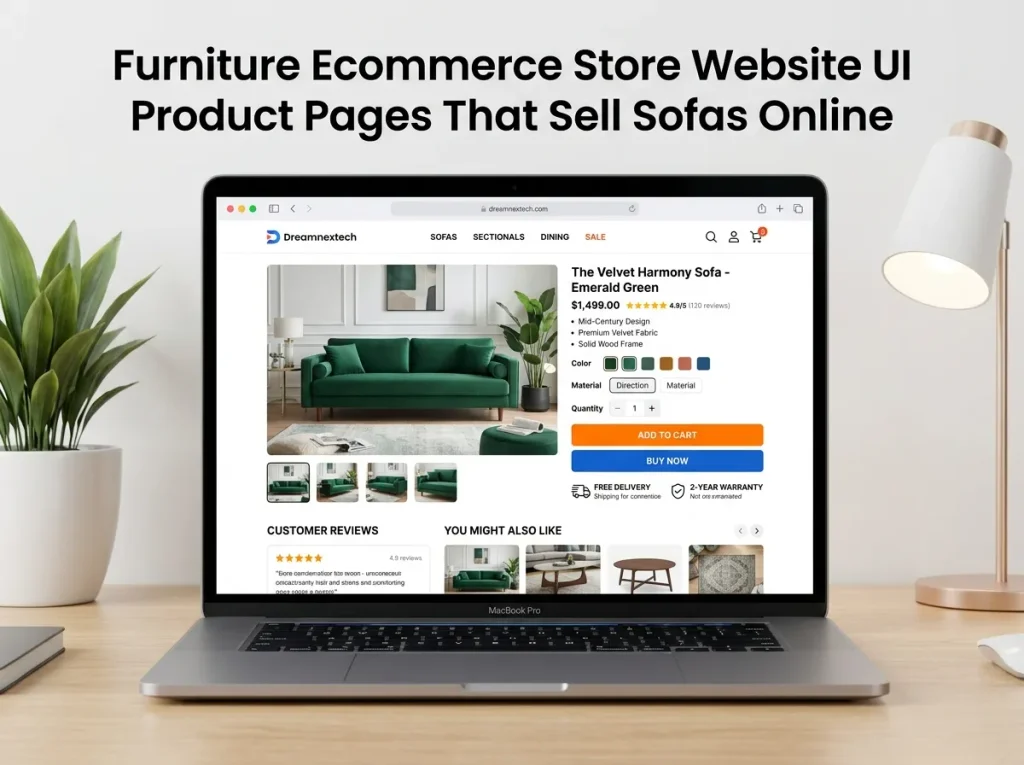
The Buy Block
Everything the shopper needs to decide, above the fold, in this order:
- Product name and short descriptor — “Aspen 3-Seater Sofa, Deep Seat”
- Price with financing beneath it — “$1,890 · or $63/month”
- Rating and review count, linked to the reviews section
- Fabric and finish selectors as visual swatches — never a dropdown of colour names
- Configuration options where relevant — left or right chaise, arm style
- Stock status — in stock, made to order with a lead time, or backordered with a date
- Delivery estimate for the shopper’s location
- Add to Cart as the dominant action, with a secondary “Order a Free Swatch”
- Save to Wishlist
On mobile, this block should collapse into a sticky bottom bar showing price and add-to-cart once the shopper scrolls past. Look for furniture ecommerce website development.
Dimensions: The Silent Conversion Killer
More furniture returns are caused by size than by any other factor. Solve it properly.
Give a labelled line diagram with overall width, depth, height, seat width, seat depth, seat height, and arm height. Add a doorway clearance note — the minimum door width the piece will pass through, and whether legs detach. Include weight for anyone carrying it upstairs. Offer a unit toggle between centimetres and inches.
Best-in-class sites add a room-fit tool: enter your room dimensions, see the sofa placed to scale. It is not difficult to build, and it removes the last real objection for a large group of shoppers.
Hire Our Professional Services
Materials and Construction
High-ticket buyers want to know what they are paying for. Be specific:
- Frame — kiln-dried hardwood, engineered wood, metal
- Suspension — sinuous springs, eight-way hand-tied, webbing
- Cushion filling — high-resilience foam, feather-wrapped, memory foam, with density figures
- Upholstery — fibre composition, rub count or durability rating, pet and child suitability
- Warranty — length, and what it actually covers
Vague copy (“premium materials, expert craftsmanship”) reads as evasion to anyone spending real money. Specifics read as confidence.
Delivery and Returns, Stated Plainly
Put this above the fold or immediately beneath it:
- Delivery cost for their location
- Estimated delivery window as real dates
- What the service includes — room of choice, assembly, packaging removal, old furniture disposal
- Return window and who pays for return shipping
- Whether the sofa arrives assembled
Every one of these left unanswered is a shopper opening a new tab to check a competitor who does answer them.
Social Proof That Carries Weight
Reviews on furniture pages need structure:
- Photo reviews first — customer images of the sofa in real homes are the single strongest proof you can display
- Rating breakdowns by attribute — comfort, quality, value, delivery experience, accuracy to photos
- Reviewer context — “Bought in Slate Grey, 3-seater”
- Brand responses to critical reviews, handled well
- Verified purchase badges
Do not hide negative reviews. A perfect five-star average reads as fake. A 4.6 with thoughtful responses to the 3-star reviews reads as trustworthy.
Cross-Sell Without Being Pushy
Furniture cross-sells naturally. Include:
- Complete the room — matching armchair, coffee table, rug
- From the same collection
- Similar alternatives — different size, different price band, different style, for shoppers still shortlisting
- Recently viewed, so comparison shoppers can return to earlier candidates without hunting
Place these below the primary content, never competing with the buy block.
Technical Requirements
None of this converts if the page is slow. Product pages must hit an LCP under 2.5 seconds despite carrying a dozen high-resolution images. That means preloading the hero image, lazy-loading the rest of the gallery, serving AVIF or WebP with responsive sizing, and inlining critical CSS.
Add Product structured data with price, availability, aggregate rating, and shipping details so your listings earn rich results in search.
Building a page like this — fast, responsive, accessible, and genuinely persuasive — is precise front-end work. It is exactly what our responsive web page design and development service is built for.
The Standard to Hold Yourself To
Open your own sofa product page and ask: could a stranger, with no prior knowledge of your brand, make a confident $2,000 decision using only what is on this screen?
If the answer is no, you know exactly what to fix.
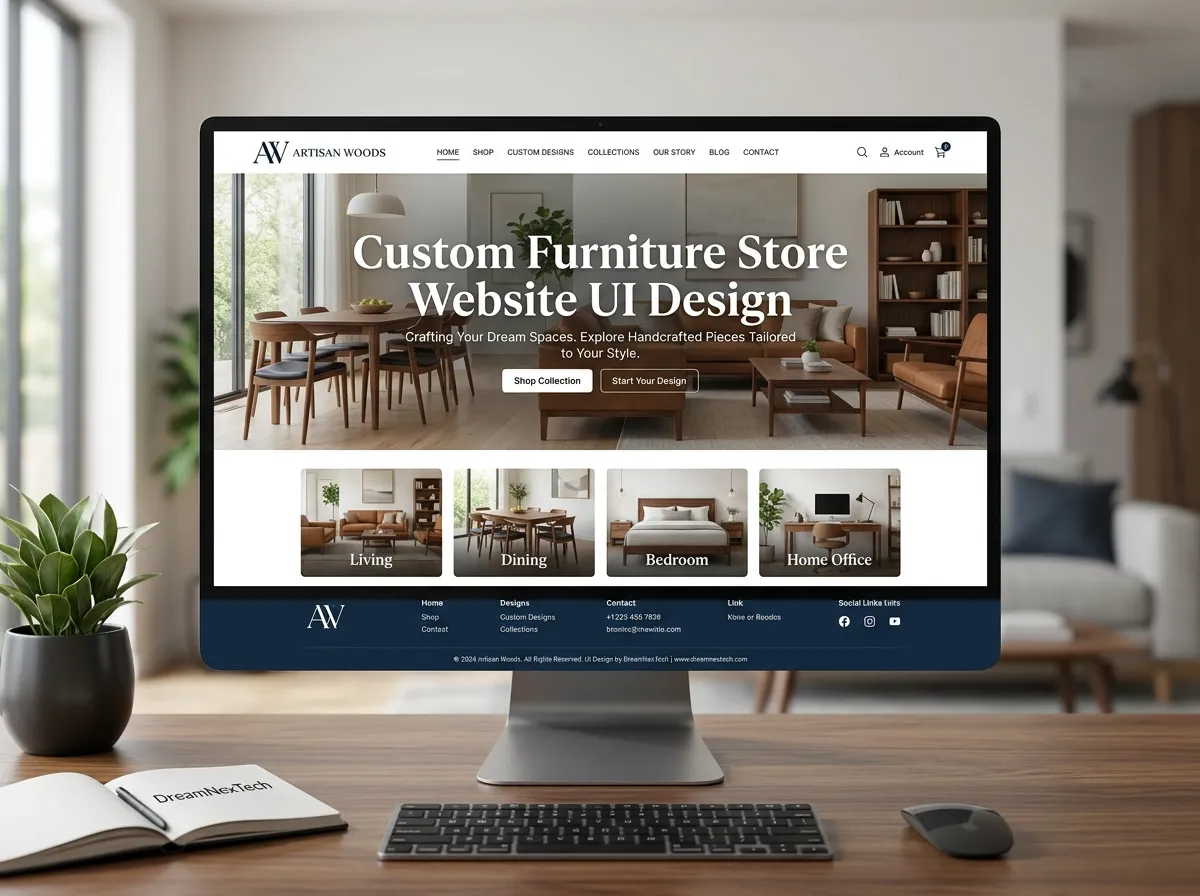




Professional Furniture Store Website Design Services For Local And Online Retailers - DreamNexTech
[…] Product data model built for variants and configurable options. Inventory sync. Payment gateways and financing providers. Delivery logic by postcode. A CMS your merchandising team can operate independently. also check furniture website development services. […]