
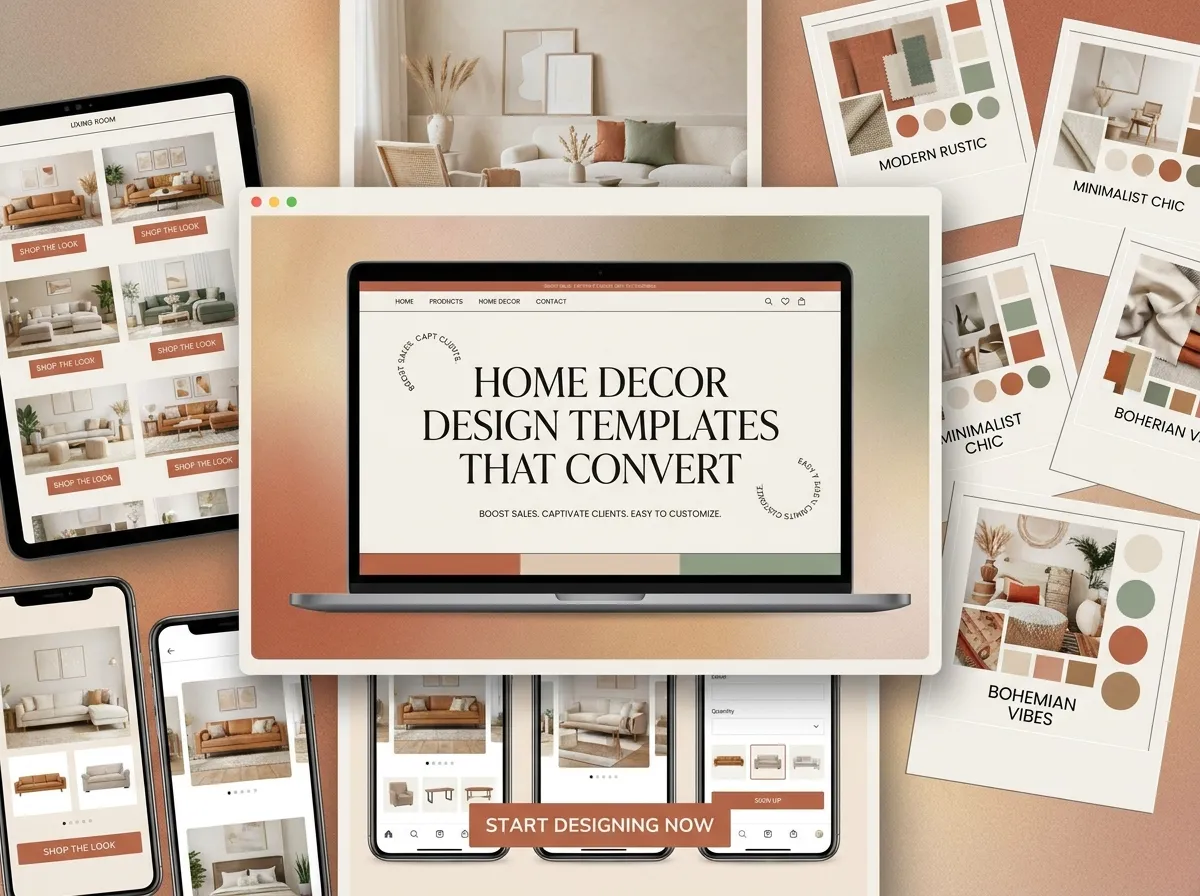
Your home decor store has beautiful products. Your website has visitors. So why is your cart still empty at the end of the day?
Here’s the uncomfortable truth: most home decor website design templates were built to look pretty in a demo, not to sell ceramic vases to a woman scrolling on her phone at 11 p.m. There’s a difference, and that difference is costing you revenue every single week you ignore it.
Below, we break down exactly what separates a Home Decor Website Design Templates That Convert and how to pick one that pays for itself.
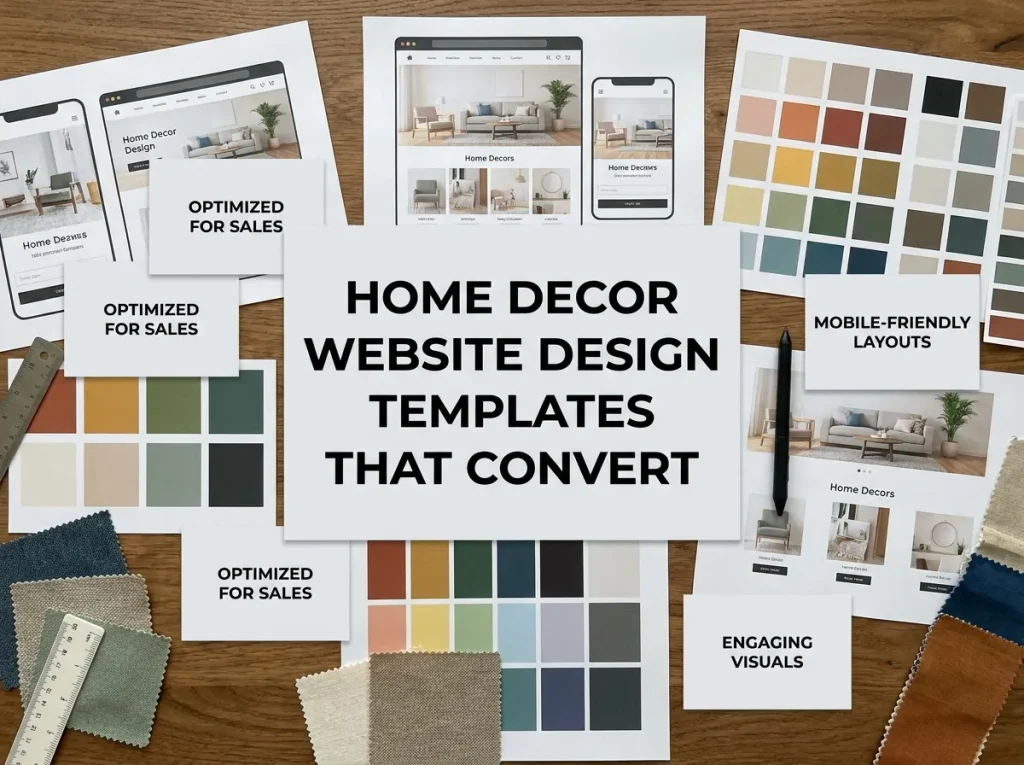
Hire Our Professional Services
Why Most Home Decor Website Themes Fail
Walk through any theme marketplace and you’ll see the same pattern. Enormous hero images. Three columns of lifestyle photography. A newsletter popup that fires before you’ve read a single word.
They look like magazines. And magazines aren’t built to convert — they’re built to be browsed.
A high-converting home decor website design does three jobs in the first five seconds:
- It tells the visitor what you sell.
- It tells them why you’re worth trusting.
- It gives them one obvious next step.
If your template buries any of those under a slideshow, you’re paying for aesthetics with abandoned sessions. This is the single biggest gap we see when auditing ecommerce home decor website theme and design for clients at DreamNexTech.
The Anatomy of a Home Decor Website Design Templates That Convert
1. A hero section that does the selling, not just the styling
Your hero is prime real estate. The best templates for a home decor store pair one strong lifestyle image with a headline that names the outcome — “Warm, layered interiors without the designer price tag” — and a single button that says exactly what happens next: Shop New Arrivals.
Not “Explore.” Not “Discover.” Those are verbs for tourists. You want buyers.
2. Category tiles above the fold
Home decor is a browsing category. People rarely arrive knowing they want an 18-inch stoneware planter — they arrive wanting their living room to feel finished. Templates with visual category tiles (Lighting, Wall Art, Textiles, Vases & Vessels, Seasonal) let visitors self-sort in one click.
This one structural choice consistently lifts pages-per-session, and pages-per-session is the strongest leading indicator of purchase in the decor niche.
3. Product grids that show scale
The number one hesitation in home decor ecommerce isn’t price — it’s “how big is this actually?” Choose a template whose product card supports multiple image slots, so you can show the product isolated on white and styled in a real room. Templates that force a single square thumbnail will quietly inflate your return rate.
4. Trust signals baked into the layout
Free shipping threshold. Return window. Real customer photos. A payment badge row. Good templates give you dedicated slots for these near the add-to-cart button — not stuffed in a footer nobody scrolls to.
5. Mobile-first, genuinely
Over 70% of decor traffic is mobile. A “responsive” theme that merely shrinks isn’t good enough. You need thumb-reachable navigation, sticky add-to-cart, collapsible filters, and images that load in under two seconds on 4G. If you need existing pages rebuilt properly for mobile rather than starting over, our team can design and edit awesome responsive web pages for your website without touching your product catalog.
Shopify vs. WordPress Home Decor Templates
This is the fork in the road for most store owners, so let’s be direct.
Choose Shopify home decor templates if: you’re selling 20–500 SKUs, you want inventory, tax, and checkout handled for you, and you’d rather spend your energy on marketing than maintenance. Dawn-based themes are fast and clean out of the box. Premium options add quick-view, bundling, and mega-menus you’d otherwise pay a developer to build.
Choose a WordPress home decor theme (with WooCommerce) if: content is part of your strategy — styling guides, seasonal lookbooks, room-by-room inspiration posts — or you need total control over layout, custom fields, and SEO structure. WordPress wins on flexibility and long-term content marketing leverage.
Choose a custom build if: you have configurators, made-to-order sizing, trade accounts, or a design language no template can carry.
Whichever way you lean, the platform matters less than the execution. A well-optimized free theme beats a bloated premium one every time.
Hire Our Professional Services
Modern, Minimal, Luxury, Vintage: Matching Template Style to Buyer Intent
Template aesthetics aren’t decoration — they’re positioning. Pick the wrong one and you attract the wrong shopper.
- Minimal / Scandinavian: generous white space, muted neutrals, tight sans-serif type. Signals calm and quality. Best for mid-price homeware and everyday essentials.
- Modern: bold grids, high-contrast blocks, asymmetric layouts. Signals design-forward and current. Best for statement lighting and contemporary furniture.
- Luxury: dark or warm-neutral palettes, serif headings, slow reveals, huge editorial imagery, restrained CTAs. Signals exclusivity. Justifies premium pricing — but only if your photography can carry it.
- Vintage / Artisanal: textured backgrounds, warm creams, handwritten accents, maker stories. Signals craft and one-of-a-kind. Best for antiques, handmade ceramics, and small-batch goods.
A quick test: cover your logo and show your homepage to someone unfamiliar with your brand. Ask them to guess your average product price. If they’re off by more than 30%, your template is fighting your pricing.
The Conversion Checklist Before You Go Live
Run every home decor template through this list before launch:
- Homepage loads in under 2.5 seconds on mobile (Core Web Vitals green)
- One primary CTA per screen — no competing buttons
- Search bar visible on mobile, with typo tolerance
- Filters for color, room, material, and price on collection pages
- Product page shows dimensions, materials, and care above the fold
- Free-shipping threshold displayed in the cart and in the announcement bar
- Cart is a slide-out drawer, not a full page redirect
- Guest checkout enabled
- Structured data (Product, Review, Breadcrumb) implemented
- Real reviews with photos on high-traffic products
Miss three of these and you’ll feel it in your conversion rate. Miss six and no amount of ad spend will save the store.
Don’t Fight Your Template — Fix It
Here’s what we tell every client: your template is a starting point, not a verdict. Most conversion problems in home decor stores are fixable in a week — a restructured hero, cleaner category architecture, compressed imagery, a rewritten add-to-cart section.
If you’d rather skip the guesswork and hand it to a team that has shipped this exact build before, we can take your store from “nice-looking” to “consistently profitable.” That includes theme selection, custom sectioning, speed optimization, and full end-to-end website development if you’re starting from scratch.
Your products already earn attention. Let’s make sure your website earns the sale.
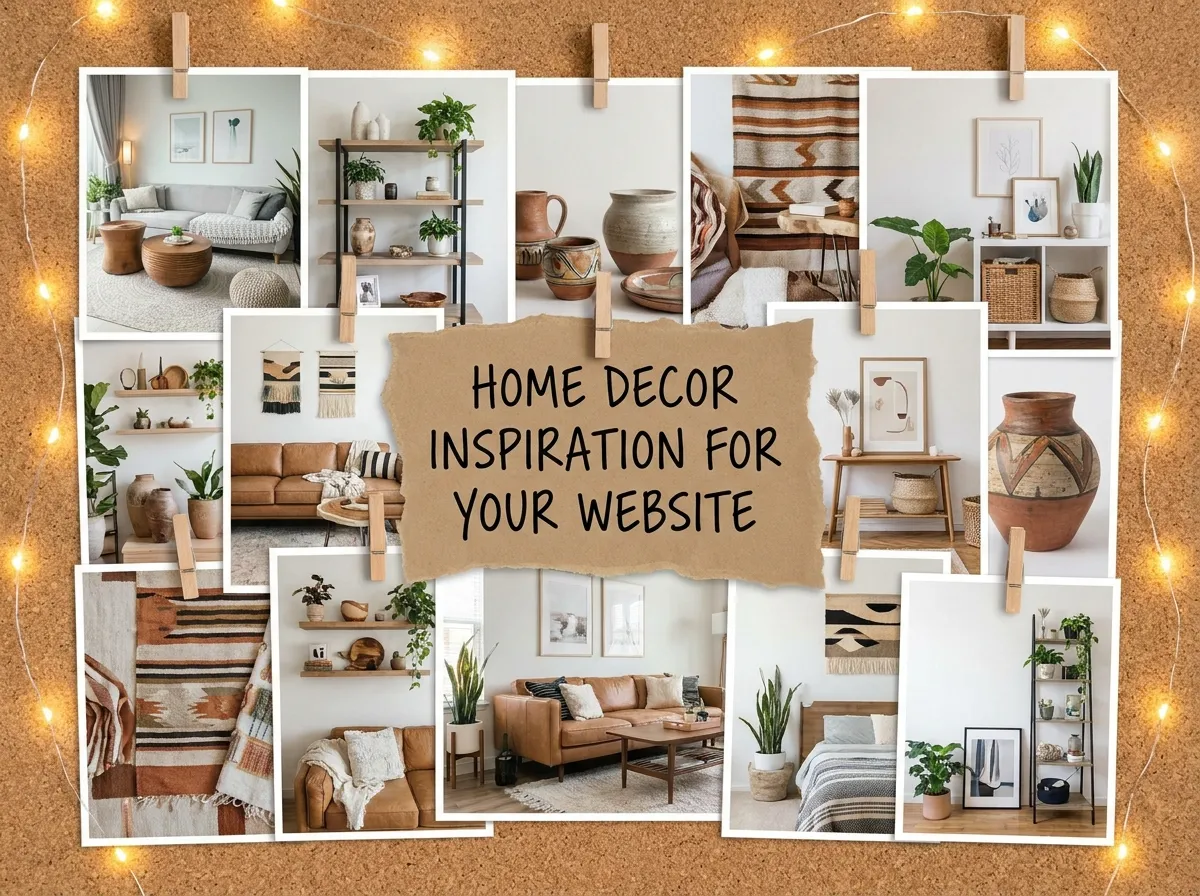


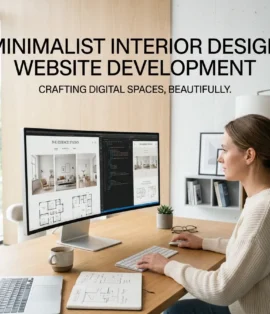
Home Decor Image For Your Website - DreamNexTech
[…] Get these mixed up — a moody lifestyle shot used as a product image, say — and your conversion rate drops while your return rate climbs. Check out home decor website design service. […]